Master One 9:30 AM Opening Range Strategy and Trading Becomes a Repeatable Process
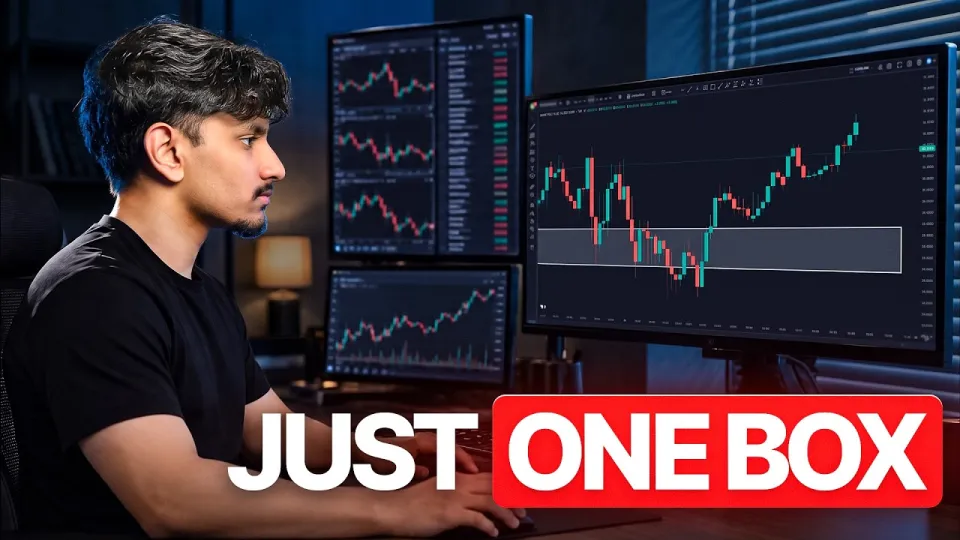
Video: Once You Master This Strategy, Trading Becomes Incredibly Simple
Need articles like this for your video? They help promote it on YouTube and Google — order them in the Telegram bot @sat_sit_bot. The bot writes and publishes the articles itself (with your YouTube video embedded) on popular topical websites (no ads). Your first 50 articles are free.
Most traders fail not because they lack indicators but because they have no fixed, repeatable process for the first minutes of the session. The simplest workable answer is a 9:30 AM opening-range strategy: mark four levels before the bell, wait for price to break one and retest it, then enter on a 1-minute confirmation candle with a defined stop. Scarface Trades breaks this down in the video «Once You Master This Strategy, Trading Becomes Incredibly Simple», and the free Simple Trader Playbook course is where the channel puts the written version of the framework.
Why most traders overcomplicate the first hour
The opening 30–60 minutes is the most information-dense part of the US session, and that density is exactly what pushes beginners toward stacked indicators. Two oscillators say sell, a moving-average cross says buy, a trend line says hold — and by the time the signals agree, the move is gone. The strategy in the video deliberately strips that down to price levels and one entry candle, because a decision you can make in five seconds is a decision you can repeat 20 times a month.
A second problem is that traders judge a setup after the fact. On a chart, a break-and-retest of the premarket high looks trivial; live, with the candle still forming and the spread widening, it is not. The video's framing is that the method only becomes simple after you have seen it work and fail enough times to trust the rules more than your impulse.
The three-step setup, level by level
Step 1 is preparation, and it happens before 9:30 AM. Mark the premarket high and premarket low, then add the previous day's high (PDH) and previous day's low (PDL). These four lines define where the session's liquidity sits, and they are the only levels the strategy needs.
Step 2 is the break. Wait for a 1-minute candle to close beyond one of those levels rather than simply wicking through it. A close above PDH, for example, tells you buyers absorbed the sellers parked there; a wick that snaps back tells you the opposite.
Step 3 is the entry model: after the break, wait for price to come back and retest the level from the other side, then enter when a 1-minute candle closes in your direction off that retest. Stop goes below the retest low for a long (above the retest high for a short), and the target is the next marked level or a fixed multiple of risk.
What the retest entry actually buys you
The retest is not decoration — it is the part of the strategy that controls your risk. Entering on the breakout candle means your stop has to sit below a level price has already left, which widens risk and shrinks the reward-to-risk ratio. Entering on the retest puts your stop a few ticks from entry, so a 1R loss stays small and a 2R or 3R winner actually pays for several mistakes.
It also filters false breaks. If price breaks PDH and then cannot reclaim it on the retest — it stalls, prints a lower high, or closes back under the level — you simply do not take the trade. You lose nothing. That single rule removes a large share of the losing breakout attempts that punish traders who buy every push through a level.
Timeframes, instruments and position sizing
The strategy is built around the 1-minute chart for entries and the 5-minute chart for context, with the 9:30 AM New York open as the anchor — so set your platform to New York time, not your local one, or every level will be drawn at the wrong hour. Futures index products and liquid large-cap stocks are the natural fit because they respect premarket and prior-day levels; thin instruments produce too many fake breaks.
Position size should be calculated from the stop distance, not from a round number of shares or contracts. If your stop is $0.40 away on a stock and you risk $100, you take 250 shares; if the stop is $1.20 away, you take roughly 83. Traders who complain that the method needs an enormous position are usually sizing by feel instead of by risk, which turns a tight stop into either an oversized bet or a meaningless one.
Where the strategy breaks down
A level-based method has one obvious weak spot: chop. When price whipsaws between premarket high and premarket low without closing decisively beyond either, every break is a trap and the retest never comes cleanly. The practical filter is to skip the setup when the opening range is unusually narrow, when the first 15 minutes produce overlapping candles, or when price sits dead in the middle of PDH and PDL with no room to the next level.
News is the second limit. A scheduled economic release or an earnings gap can blow through a level without any retest at all, and the strategy has no answer for that — you either stand aside or accept that the setup did not occur. Third, the method says nothing about which option contract to buy if you trade options rather than shares or futures; strike selection and expiration are a separate decision that the level framework does not solve.
Backtesting before you risk a dollar
The only way to know whether this works for you is to replay it. Take 50 to 100 past sessions, mark the four levels, and log every valid break-and-retest with entry, stop, target and result. Record the ones you skipped and why. What you are measuring is not just the win rate but whether the average winner is large enough to cover the losers plus commissions.
Expect the exercise to feel tedious — that is the point. Setups that look obvious in hindsight regularly turn out to be marginal when you have to decide in real time whether the retest candle actually closed in your favor. If the numbers hold up over a decent sample, you have a process; if they do not, you have saved yourself the tuition.
Common questions traders raise about this approach
Does the strategy work on forex pairs? The logic of prior-day high and low plus a retest carries over to major pairs such as EUR/USD, but the 9:30 AM anchor is a US equity-session concept, so forex traders usually re-anchor to the London or New York open and accept more noise around session overlaps.
Which broker or instrument should you use? That is a platform decision, not a strategy decision — what matters is tight spreads, reliable 1-minute data and the ability to set stop orders at the level rather than at a round number.
Should you trade one ticker or many? Concentration helps when you are learning, because you see the same levels behave the same way day after day. Adding names is a scaling decision you make after the process is consistent, not before.
Useful links
- Free Simple Trader Playbook course: https://events.scarfacetrades.com/the-simple-trader-playbook-waitlist
- The Accelerator private community and live trading: https://whop.com/scarface-trades
- Second channel with live trade breakdowns: https://www.youtube.com/@ScarfaceUnscripted/videos
- Instagram: https://www.instagram.com/scarfacetrades_
- X: https://twitter.com/ScarfaceTrades_
Final thoughts
The value of this framework is not that it predicts the market but that it removes decisions: four levels, one break, one retest, one confirmation candle, one stop. Scarface Trades built the breakdown around that idea, and the free Simple Trader Playbook course is the natural next step if you want the rules written out before you start backtesting. Run the sample first, size every trade from the stop, and skip the sessions where price gives you nothing to work with. Trading gets simple when the process is fixed and the position size is boring.
Key takeaways
- The strategy anchors on the 9:30 AM New York open, when the first 1-minute candle sets the opening range.
- Three steps: mark the premarket high and low plus the previous day's high and low, wait for a break and retest, then enter on a 1-minute confirmation candle.
- The entry trigger is a retest of the broken level, not the breakout candle itself — chasing the break is the most common mistake.
- A single setup usually targets 1R to 3R, so the edge comes from win rate and repetition, not from one large position.
- Backtest at least 50–100 historical examples before risking money; the setups look obvious only in hindsight.
Questions & answers
Where exactly do you enter — on the breakout candle or after the retest?
On the retest. Wait for the 1-minute candle to close beyond the level, then let price come back to it and enter when a candle closes in your direction off that level. Entering on the breakout candle forces a wider stop and leaves you exposed to false breaks that never reclaim the level.
Does this strategy need a huge position to be profitable?
No — size comes from the stop distance, not from a target dollar amount. A tight retest stop means fewer shares or contracts are needed to risk the same amount, and the edge comes from repeating a 1R-to-3R setup many times rather than from one oversized trade.
What do you do when price sits between the previous day's high and low?
Treat it as a no-trade zone unless price closes decisively beyond one of the marked levels and then retests it. A market parked in the middle of the range with no room to the next level produces the chop that makes every break a trap.
Do these setups really work, or do they only look easy in hindsight?
That is exactly why backtesting matters. Replay 50 to 100 sessions, log every valid break-and-retest with entry, stop and result, and check whether the average winner covers the losers plus costs. If the numbers hold over a real sample, you have a process worth trading; if not, you have saved the tuition.
Source: Once You Master This Strategy, Trading Becomes Incredibly Simple · Markdown version